


Why Companies Organize Flu Vaccination Programs
Seasonal influenza continues to affect workplaces each year. Because the virus spreads easily through respiratory droplets, shared environments such as offices, factories, and workspaces can experience rapid transmission once influenza begins circulating.
When influenza spreads within a company, it may lead to:
- Increased employee absenteeism
- Reduced workplace productivity
- Operational disruptions
- Increased healthcare-related costs
For this reason, many organizations now organize corporate flu vaccination programs as part of their employee health and wellness initiatives.
Providing influenza vaccination directly within the workplace helps protect employees while minimizing the impact of seasonal flu outbreaks.

Step 1: Assess Your Company’s Vaccination Needs
The first step in organizing a corporate flu vaccination program is determining the scope of the vaccination campaign.
Companies typically consider:
- The total number of employees who may participate
- The number of office locations involved
- Preferred vaccination dates
- Any shift schedules that need accommodation

Step 2: Coordinate With a Corporate Vaccination Provider
Once the company has determined the scope of the program, the next step is to coordinate with a vaccination provider experienced in workplace immunization.
A corporate vaccination provider typically assists with:
- Vaccine procurement
- Medical staffing
- Vaccination logistics
- Program scheduling
Working with an experienced provider helps ensure that the vaccination program follows proper medical standards and safety protocols.

Step 3: Schedule On-Site Vaccination Sessions
Most corporate vaccination programs are conducted on-site at company premises to make vaccination accessible to employees.
Companies may schedule vaccination sessions based on:
- Office schedules
- Employee shift patterns
- Multiple departments or locations
On-site vaccination helps maximize participation because employees can receive the vaccine without leaving the workplace.

Step 4: Inform Employees About the Vaccination Program
Employee communication is an important part of any vaccination campaign.
Companies typically inform employees about:
- The purpose of the vaccination program
- The date and location of vaccination sessions
- Who may receive the vaccine
- Any preparation instructions
Clear communication helps employees understand the benefits of vaccination and encourages participation.
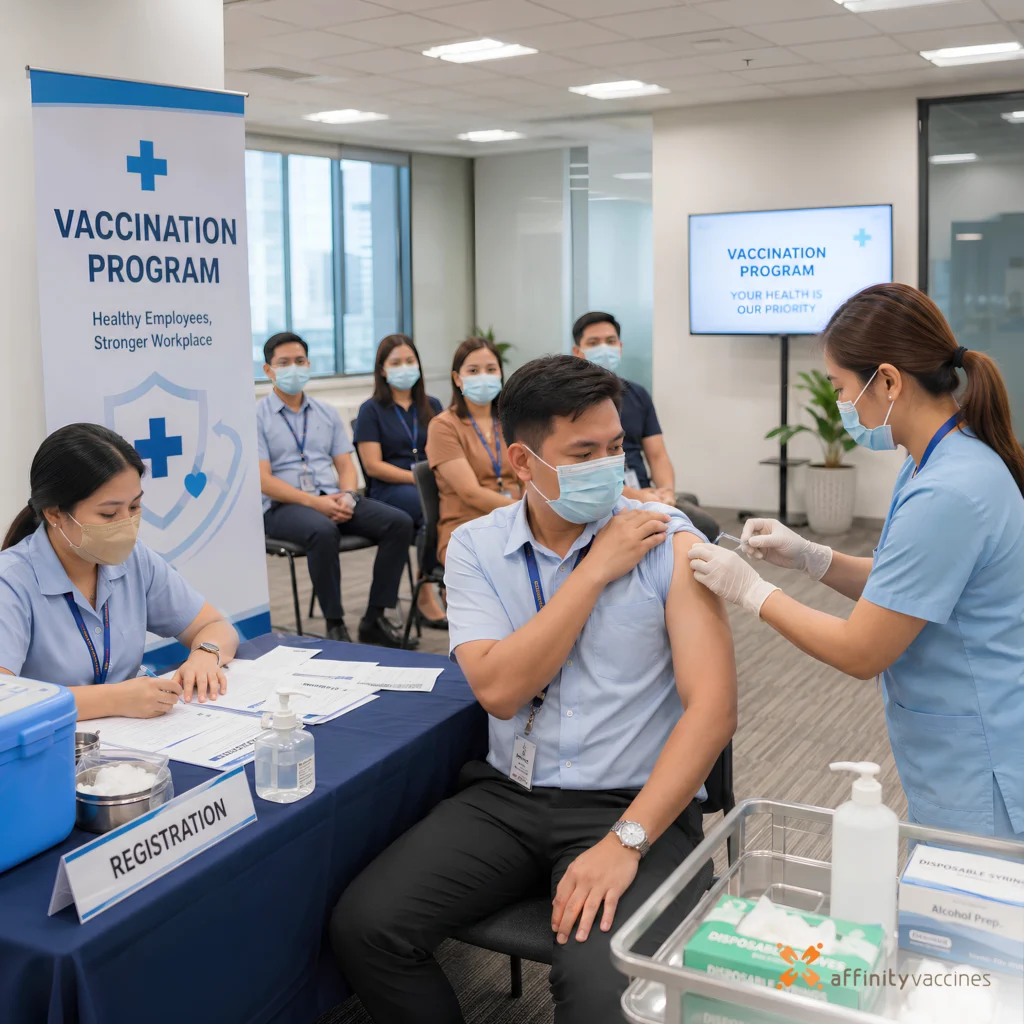
Step 5: Conduct the On-Site Vaccination Program
On the scheduled vaccination day, healthcare professionals set up a designated vaccination station within the workplace.
The vaccination process generally includes:
- Registration of participating employees
- Medical screening where appropriate
- Vaccine administration by licensed healthcare professionals
- Documentation of vaccination
The process is usually designed to be efficient so employees can receive the vaccine quickly and return to work with minimal disruption.

Step 6: Documentation and Program Completion
After vaccination is completed, companies may receive documentation confirming that the vaccination program has been conducted.
Employees may also receive vaccination documentation for their personal health records.
Proper documentation helps ensure that the program meets workplace health and safety standards.
Why Early Planning Is Important
Corporate vaccination programs require coordination between the company and the vaccination provider.
Organizations are encouraged to begin planning several months in advance to ensure:
- Vaccine availability
- Efficient scheduling
- Adequate staffing for vaccination sessions
Early planning also allows employees to receive the vaccine before influenza activity increases.
Corporate Flu Vaccination With Affinity Vaccines
At Affinity Vaccines, vaccination services are designed specifically for on-site workplace immunization programs.
Since 2008, Affinity Vaccines has supported vaccination programs for organizations across multiple industries in the Philippines.
Each year, more than 100,000 employees receive influenza vaccination through corporate vaccination programs organized by Affinity Vaccines.
Our programs include:
- On-site workplace vaccination services
- Professional vaccine administration by licensed healthcare providers
- Organized vaccination campaigns for companies of different sizes
- Efficient scheduling designed to minimize workplace disruption
Vaccination programs follow internationally recognized medical guidance, including recommendations from the World Health Organization.
Plan Your Company’s Flu Vaccination Program Early
Organizations planning their corporate flu vaccination programs are encouraged to coordinate early to ensure smooth implementation and vaccine availability.
Early planning helps companies:
- Secure vaccine supply
- Schedule convenient vaccination dates
- Protect employees before influenza activity increases
Companies interested in organizing workplace vaccination programs may coordinate early with Affinity Vaccines to schedule their on-site corporate flu vaccination program.
Early preparation helps support a healthier workplace and reduce disruptions caused by seasonal influenza.
Frequently Asked Questions
When should companies organize flu vaccination programs?
Companies are encouraged to schedule vaccination programs before peak influenza activity so employees have time to develop protective immunity.
Can flu vaccination be conducted at the workplace?
Yes. Many organizations implement on-site vaccination programs where healthcare professionals administer vaccines directly at company premises.
How many employees are needed for a corporate vaccination program?
Corporate vaccination programs can be organized for companies of different sizes, depending on workplace needs.
Why do companies provide flu vaccination for employees?
Workplace vaccination programs help reduce absenteeism, protect employee health, and maintain productivity during influenza season.