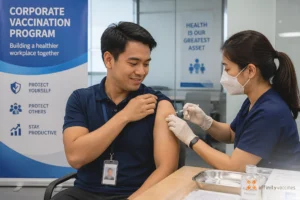

Introduction: Employee Health Is Now a Business Priority
In today’s fast-paced business environment, Philippine companies face increasing pressure. Specifically, they must maintain productivity, protect their workforce, and ensure business continuity. After years of disruptions from outbreaks and seasonal illnesses, organizations have realized one truth.
A healthy workforce is the foundation of a strong, resilient, and competitive business.
This is why more companies are taking action. Specifically, BPOs, banks, retail chains, manufacturing plants, logistics providers, and corporate offices now prioritize employee immunization programs. Moreover, they consider it a key pillar of workforce protection.
Vaccination is no longer just a medical intervention. Instead, it is a strategic business decision. Consequently, it protects people, prevents absenteeism, and strengthens organizational stability.
Why Health Has Become a Workplace Priority
Three major factors reshaped how companies think about employee health.
1. Rising Illnesses During Rainy and “Ber” Months
Flu, pneumonia, viral respiratory infections, and gastrointestinal outbreaks increase significantly in certain months. Consequently, this impacts employee attendance severely.
2. Growing Healthcare and Hospitalization Costs
HMO reimbursements and medical claims have risen. Therefore, this affects corporate budgets significantly.
3. The Workplace Is a High-Risk Environment
Air-conditioned offices, shared equipment, elevators, meeting rooms, and crowded workspaces make viral spread inevitable. As a result, companies face constant health challenges.
Companies can no longer afford a reactive approach. Instead, prevention is more efficient, more economical, and more effective.
The Business Case for Employee Immunization
Philippine companies now implement corporate vaccination Philippines programs for one key reason. Vaccination protects business performance.
1. Reduced Absenteeism
Vaccines against flu, pneumonia, hepatitis, and other diseases significantly reduce sick leave. Consequently, they prevent unexpected work disruptions.
2. Fewer Medical Claims
Vaccinated employees are less likely to require hospitalization. Moreover, they use fewer costly HMO benefits.
3. Improved Productivity
Healthy employees perform better. Specifically, they meet deadlines and maintain work quality consistently.
4. Business Continuity During Outbreaks
Vaccination prevents cluster infections. Therefore, it stops teams or entire departments from shutting down temporarily.
5. Stronger Employee Morale and Engagement
Employees feel valued when companies protect their well-being. Consequently, this improves overall engagement.
6. Enhanced Employer Branding
Health-conscious companies attract talent. Additionally, they improve retention rates significantly.
In short, vaccination strengthens both employee wellness and company performance.
Top Vaccines Prioritized by Philippine Companies
Most corporate vaccination programs include the following high-impact vaccines.
1. Influenza (Flu) Vaccine
This is the most widely adopted corporate vaccine.
Why Companies Prioritize It
First, flu spreads rapidly in workplaces. Second, it peaks during rainy and cooler months. Third, it causes high absenteeism. Finally, it protects employees and their families.
Therefore, annual flu vaccination is often the baseline of any company-wide immunization effort.
2. Pneumococcal (Pneumonia) Vaccine
This vaccine is important for adults, especially those aged 50 and above or with chronic conditions.
Why Companies Adopt It
First, pneumonia is a leading cause of hospitalization. Second, it protects senior staff, executives, and high-risk employees. Finally, it’s especially relevant for employees with comorbidities.
3. Hepatitis A and B Vaccines
These vaccines are crucial for food handling, sanitation, healthcare work, and large offices.
Why Companies Value It
First, it prevents workplace-acquired infections. Second, it reduces long-term medical complications. Finally, it supports compliance with workplace safety requirements.
4. HPV Vaccine
Companies increasingly offer this during corporate Women’s Month or HR wellness campaigns.
Why Companies Prioritize It
First, HPV causes cervical cancer. Second, it affects women during peak working years. Therefore, vaccination significantly reduces long-term health risks.
5. Tdap (Tetanus, Diphtheria, Pertussis)
This is an essential booster for adults.
Why Companies Include It
First, it protects field workers and employees with infants. Second, it prevents pertussis outbreaks. Finally, it’s recommended every 10 years.
6. Other Vaccines Depending on Industry Needs
Different industries require specific vaccines. For instance, schools, hospitality, and retail need MMR and Chickenpox vaccines. Additionally, food and beverage industries require Typhoid vaccines. Moreover, animal-handling sectors need Rabies vaccines. Finally, RSV and COVID boosters follow DOH and WHO guidance.
Why Companies Are Moving From “Optional” to “Standard” Vaccination Programs
1. Prevention Is Cheaper Than Treatment
Workplace vaccination dramatically reduces long-term medical and operational costs. Therefore, it makes strong financial sense.
2. Productivity Is a Competitive Advantage
A vaccinated workforce means fewer disruptions. Consequently, this ensures consistent workflow.
3. Employees Expect Health Protection
Health-conscious workplaces attract and retain better talent. Therefore, vaccination becomes a recruitment advantage.
4. Compliance and Safety
Some industries require updated vaccinations. Specifically, this protects both employees and consumers.
5. Multi-Generational Households
Filipino families often include children and seniors. Consequently, this increases the spread of diseases. Therefore, vaccination is both a business and societal responsibility.
Which Industries Benefit the Most?
BPO and Call Centers
These operations have high-density environments with round-the-clock staffing. Therefore, vaccination is essential.
Corporate Offices and Shared Workspaces
Air-conditioned environments with frequent client interaction need protection. Consequently, vaccination prevents widespread illness.
Retail and Malls
These businesses have constant exposure to large crowds. Therefore, employee protection is critical.
Food and Hospitality
Strict hygiene standards and customer-facing roles require vaccination. Moreover, it protects both employees and customers.
Manufacturing and Logistics
Close working environments mean high absenteeism impacts production timelines. Therefore, vaccination maintains operational continuity.
Healthcare and Caregiving
Higher exposure to viruses, bacteria, and direct patient care creates risks. Consequently, vaccination is mandatory in many cases.
Schools and Education
Regular interaction with students, parents, and staff spreads illnesses quickly. Therefore, vaccination protects educational continuity.
For many companies, vaccination is now part of their annual operating plan. It’s no longer just a wellness add-on.
The Most Common Corporate Vaccination Calendar in the Philippines
Many HR departments now structure their year strategically.
February to March: HPV (Women’s Health)
This timing aligns with Women’s Month celebrations. Therefore, it maximizes participation.
April to July: Annual Flu Vaccination
This period provides protection before peak flu season. Consequently, employees gain immunity when needed most.
Year-Round: Pneumonia, Hepatitis A/B, Tdap
These vaccines address ongoing health needs. Therefore, they’re available continuously.
Seasonal: Typhoid, MMR, Chickenpox
Industry-specific vaccines are offered when relevant. Consequently, this meets sector requirements.
On-Demand: Executive Vaccination or High-Risk Groups
Customized programs address specific needs. Therefore, this provides flexible protection.
This predictable calendar helps HR teams budget and plan more effectively.
How Corporate Immunization Strengthens Workforce Culture
Vaccination programs do more than protect health. Instead, they reinforce company culture in multiple ways.
Employees Feel Valued
Providing vaccines shows genuine care. Consequently, this builds loyalty and trust.
HR Becomes Proactive Rather Than Reactive
Prevention replaces crisis response. Therefore, HR operates more strategically.
Teams Experience Fewer Disruptions
Healthier teams are more cohesive. Consequently, collaboration improves naturally.
Company Reputation Improves
A strong wellness program sets a company apart from competitors. Therefore, it enhances brand perception.
Final Thoughts on Corporate Vaccination Philippines
Healthy companies start with healthy employees.
As Philippine organizations become more aware of several factors, change happens. Specifically, they recognize the hidden costs of illness, the value of prevention, and the demand for workplace resilience. Consequently, employee vaccination has become a critical business strategy.
Ultimately, a healthier workforce leads to a stronger, more stable, and more productive business.
Affinity Vaccines helps Philippine companies implement comprehensive corporate vaccination Philippines programs. Moreover, we provide strategic planning, convenient onsite services, and year-round support.
To inquire or request a corporate vaccination proposal, please email vaccines@affinity.com.ph.