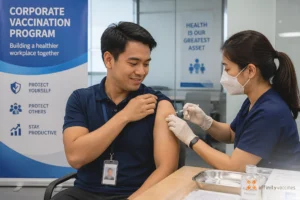

Understanding Flu Season in the Philippines
Influenza remains a common respiratory infection worldwide. While temperate countries experience clear winter flu seasons, the pattern in tropical countries like the Philippines can be different.
In the Philippines, influenza activity may occur throughout the year, but cases often increase during the rainy months and periods when respiratory viruses circulate more actively.
Because of this, timing influenza vaccination properly is important to ensure individuals develop immunity before influenza activity begins to rise.
Vaccination remains the most effective way to reduce the risk of infection and prevent complications from seasonal influenza.
When Is the Best Time to Get the Flu Vaccine?
The best time to receive the flu vaccine is before the peak influenza season, allowing the body time to build protective immunity.
After vaccination, it typically takes about two weeks for the body to develop sufficient antibodies against influenza viruses.
For many individuals in the Philippines, vaccination is commonly recommended a few months before periods when influenza cases tend to increase, which often coincides with the rainy season.
However, because influenza can circulate throughout the year in tropical climates, vaccination remains beneficial even if administered outside traditional peak months.
Why Annual Flu Vaccination Is Important
Influenza viruses change slightly every year. This is why seasonal influenza vaccines are updated annually to match the virus strains most likely to circulate.
The World Health Organization regularly reviews global influenza surveillance data and recommends updated vaccine compositions for each season.
For example, the 2026 influenza vaccine recommendation includes protection against:
- A(H1N1)pdm09-like virus
- A(H3N2)-like virus
- B/Victoria lineage virus
Because immunity from vaccination gradually declines over time, annual influenza vaccination is recommended to maintain protection.
Who Should Receive the Flu Vaccine
Influenza vaccination is recommended for most individuals, particularly those who are more vulnerable to complications.
Priority groups include:
- Pregnant women
- Healthcare workers
- Adults aged 65 years and older
- Children aged 6 months to 5 years
- Individuals with chronic medical conditions, such as:
- Diabetes
- Heart disease
- Chronic lung disease
- Kidney disease
- Immunocompromised conditions
Vaccination helps reduce both the risk of infection and the severity of illness.
Why Flu Vaccination Is Important for Workplaces
Workplaces are environments where respiratory infections can spread easily. When influenza spreads within a company, it may lead to:
- Increased employee absenteeism
- Reduced productivity
- Disruption of daily operations
For this reason, many organizations now include corporate flu vaccination programs as part of their employee health initiatives.
Providing vaccination in the workplace helps protect employees and reduce the operational impact of seasonal influenza.
When Should Companies Schedule Workplace Flu Vaccination?
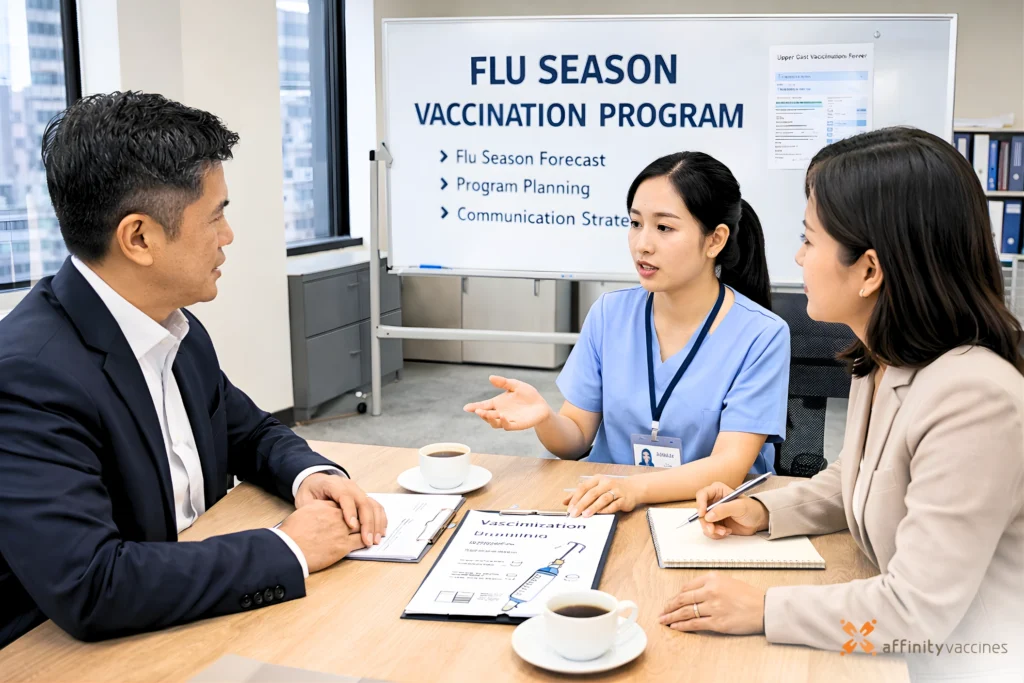
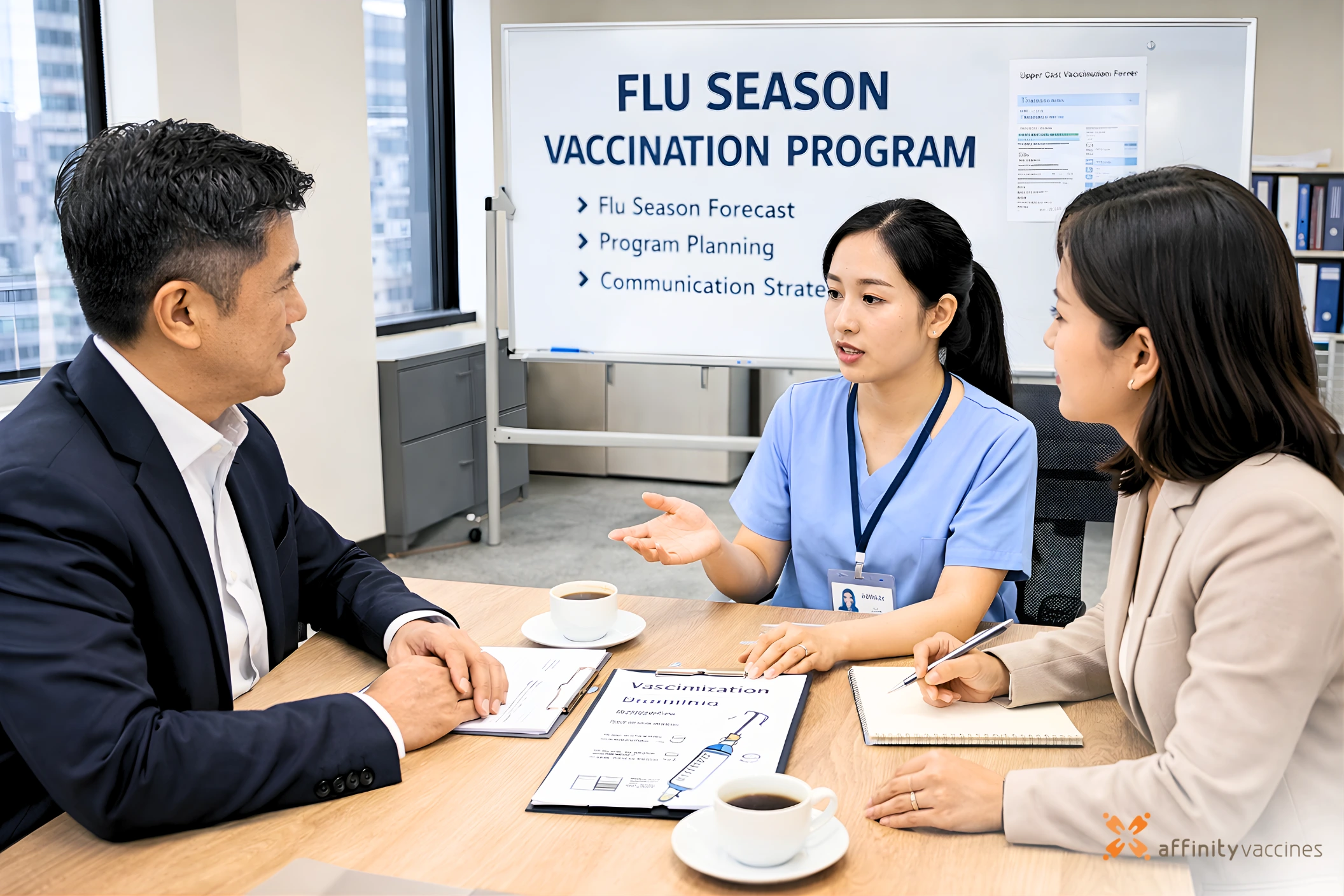
Companies planning influenza vaccination programs are encouraged to schedule vaccination campaigns ahead of peak influenza activity.
Early planning allows organizations to:
- Ensure vaccine availability
- Schedule convenient vaccination dates
- Protect employees before influenza cases begin to rise
Because corporate vaccination programs require coordination and scheduling, companies often begin planning their workplace vaccination programs several months in advance.
Corporate Flu Vaccination with Affinity Vaccines
At Affinity Vaccines, influenza vaccination programs are designed specifically for organizations that want to protect their workforce through on-site workplace vaccination services.
Corporate vaccination programs may include:
- On-site flu vaccination for employees
- Organized workplace vaccination campaigns
- Professional vaccine administration by licensed healthcare providers
- Efficient scheduling for organizations of various sizes
Vaccination programs follow internationally recognized medical guidance, including recommendations from the World Health Organization, and vaccines are sourced from reputable global manufacturers.
Plan Your Company’s Flu Vaccination Program Early
Organizations planning their 2026 corporate flu vaccination program are encouraged to coordinate early to ensure vaccine availability and efficient workplace scheduling.
Early planning helps companies:
- Secure vaccine supply
- Schedule convenient vaccination dates
- Ensure employees are protected before peak influenza activity
Companies interested in organizing workplace vaccination programs may contact Affinity Vaccines early to schedule their on-site corporate flu vaccination service for the upcoming influenza season.
Frequently Asked Questions

When should I get the flu vaccine in the Philippines?
- It is best to receive the flu vaccine before influenza activity increases, allowing the body about two weeks to develop protective immunity.
Can you get the flu vaccine any time of the year?
- Yes. Because influenza can circulate throughout the year in tropical countries, vaccination remains beneficial even outside traditional peak months.
How often should you get the flu vaccine?
- Influenza vaccination is recommended once every year because influenza viruses change and immunity from previous vaccination gradually decreases.
How long does it take for the flu vaccine to work?
- After vaccination, the body usually takes about two weeks to develop protective antibodies against influenza viruses.