

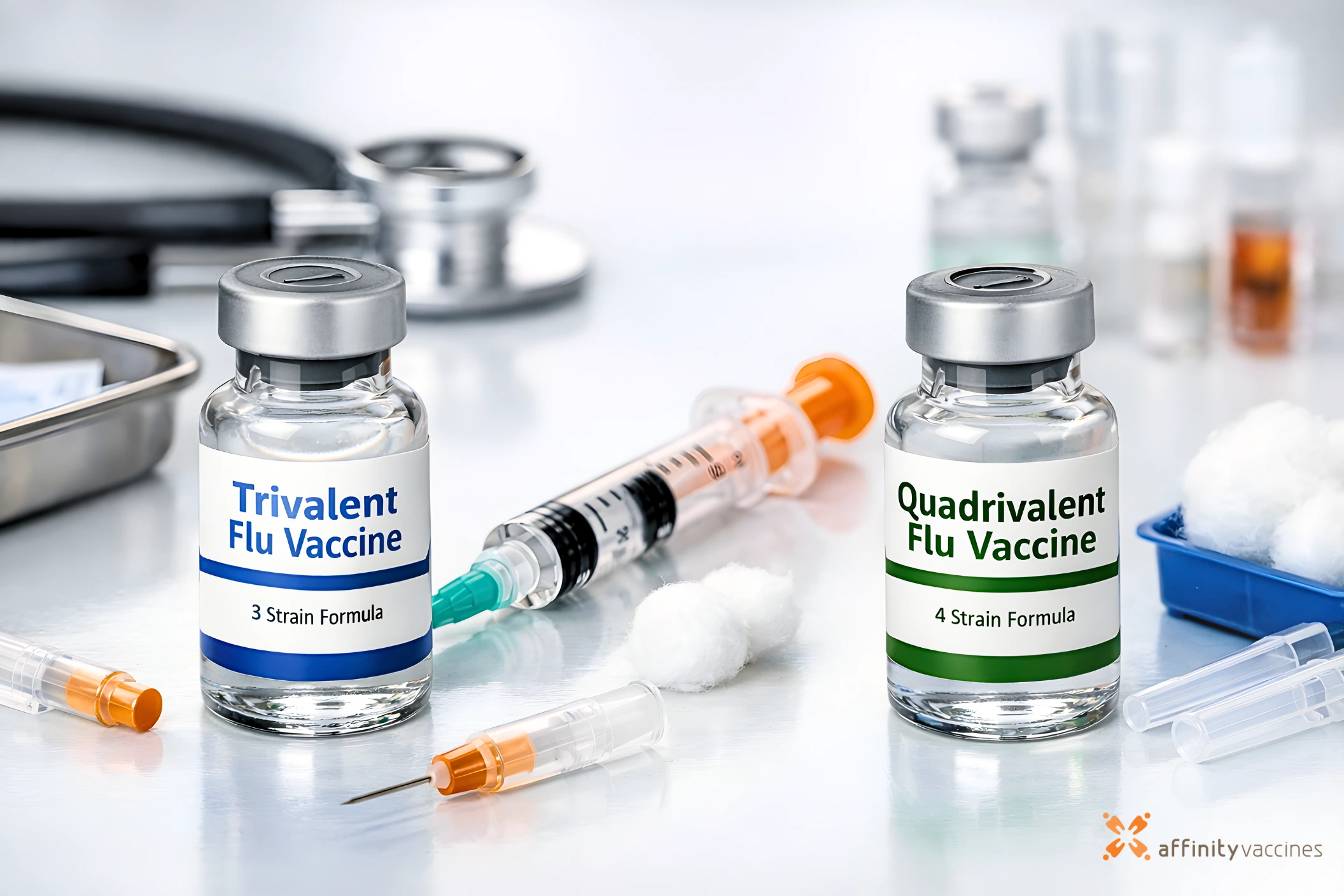
- Understanding Influenza Vaccines
Influenza vaccines are updated regularly because influenza viruses constantly evolve. Each year, global health authorities analyze circulating influenza strains and recommend vaccine formulations designed to provide protection against the most relevant viruses.
For the 2026 influenza vaccination season, the World Health Organization has issued updated guidance on the composition of influenza vaccines.
One important topic that often raises questions among patients and organizations is the difference between trivalent and quadrivalent flu vaccines. Both vaccines aim to protect against seasonal influenza, but they differ slightly in the number of virus strains included.
Understanding these differences helps individuals and organizations make informed decisions when planning influenza vaccination programs.
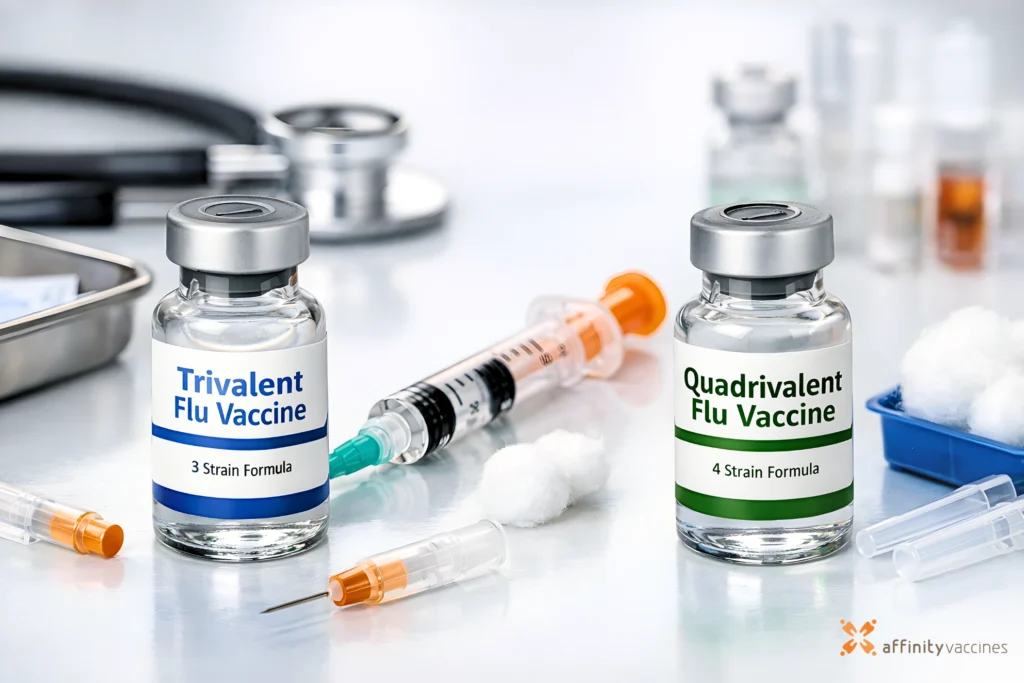
What Is a Trivalent Flu Vaccine?
A trivalent influenza vaccine protects against three influenza virus strains.
For the 2026 influenza season, the World Health Organization recommends trivalent vaccines that include protection against:
-
- Influenza A(H1N1)pdm09-like virus
-
- Influenza A(H3N2)-like virus
-
- Influenza B virus from the Victoria lineage
These three virus strains represent the influenza viruses most likely to circulate during the upcoming season based on global surveillance.
Trivalent vaccines are designed to provide targeted protection against the most relevant influenza strains identified through international monitoring systems.
What Is a Quadrivalent Flu Vaccine?
A quadrivalent influenza vaccine protects against four influenza virus strains.
These vaccines typically include protection against:
-
- Influenza A(H1N1)
-
- Influenza A(H3N2)
-
- Influenza B (Victoria lineage)
-
- Influenza B (Yamagata lineage)
Quadrivalent vaccines were developed to provide broader protection by including two influenza B lineages instead of one.
For several years, quadrivalent vaccines became widely used in vaccination programs around the world because both B lineages were circulating in different regions.
Why WHO Is Recommending Trivalent Vaccines
Recent global influenza surveillance has shown that the B/Yamagata lineage virus has not been detected worldwide for several years.
Because of this, global health experts now consider the B/Yamagata lineage to be likely no longer circulating in the human population.
As a result, the World Health Organization now recommends a shift toward trivalent influenza vaccines, which focus on the strains that are currently relevant.
This change helps:
-
- Simplify vaccine production
-
- Improve supply stability
-
- Maintain protection against circulating viruses
The recommended trivalent vaccine formulation for the 2026 influenza season therefore includes protection against:
-
- A(H1N1)pdm09-like virus
-
- A(H3N2)-like virus
-
- B/Victoria lineage virus
Are Quadrivalent Flu Vaccines Still Available?
Even though global guidance now favors trivalent influenza vaccines, quadrivalent flu vaccines may still be available in some markets depending on manufacturer production and existing supply contracts.
Quadrivalent vaccines remain safe and effective and may still be used in certain vaccination programs.
In practice, vaccination providers may offer either:
-
- Trivalent influenza vaccines, aligned with the latest WHO recommendation
-
- Quadrivalent influenza vaccines, depending on vaccine procurement and availability
Both vaccine types continue to provide protection against the major circulating influenza viruses.
Do Trivalent and Quadrivalent Vaccines Work Differently?
From a clinical standpoint, both vaccines work in the same way.
Influenza vaccines stimulate the immune system to recognize specific influenza virus strains. When vaccinated individuals are later exposed to these viruses, their immune system is better prepared to fight the infection.
The key difference between trivalent and quadrivalent vaccines is simply the number of influenza B strains included.
Because the B/Yamagata lineage has not circulated in recent years, the additional strain included in quadrivalent vaccines is currently considered less relevant for seasonal protection.
Which Flu Vaccine Should You Get?
For most individuals, the most important factor is receiving a seasonal influenza vaccine, regardless of whether it is trivalent or quadrivalent.
Both vaccines provide protection against the influenza strains most commonly responsible for seasonal outbreaks.
Healthcare providers typically select the available vaccine based on:
-
- Vaccine supply
-
- Manufacturer availability
-
- Procurement agreements
-
- National vaccination programs
The most important recommendation remains annual influenza vaccination.
Why Influenza Vaccination Is Important for Workplaces

Influenza spreads easily in shared environments such as offices, factories, and workplaces.
During flu season, employee illness can lead to:
-
- Increased absenteeism
-
- Reduced productivity
-
- Workplace disruptions
Because of this, many companies include workplace flu vaccination programs as part of their employee health initiatives.
Providing vaccination within the workplace helps protect employees while reducing the operational impact of seasonal influenza.
Corporate Flu Vaccination with Affinity Vaccines
At Affinity Vaccines, influenza vaccination programs are designed specifically for organizations seeking safe and efficient on-site workplace vaccination services.
Corporate vaccination programs may include:
-
- On-site flu vaccination for employees
-
- Organized workplace vaccination campaigns
-
- Professional vaccine administration by licensed healthcare providers
-
- Efficient scheduling for companies of different sizes
Vaccination services follow internationally recognized medical guidance, including recommendations from the World Health Organization.
Plan Your 2026 Workplace Flu Vaccination Program Early
Organizations planning their 2026 corporate flu vaccination program are encouraged to coordinate early to ensure smooth implementation and vaccine availability.
Early planning helps companies:
-
- Secure vaccine supply
-
- Schedule convenient vaccination dates
-
- Protect employees before peak influenza activity
Companies interested in organizing workplace vaccination programs may coordinate early with Affinity Vaccines to schedule their on-site corporate flu vaccination service for the upcoming influenza season.
Frequently Asked Questions

What is the difference between trivalent and quadrivalent flu vaccines?
- Trivalent vaccines protect against three influenza strains, while quadrivalent vaccines protect against four strains.
- The additional strain in quadrivalent vaccines is typically a second influenza B lineage.
Why is the WHO recommending trivalent flu vaccines?
- The B/Yamagata lineage has not been detected globally for several years, leading global health experts to focus on the strains that are currently circulating.
- This is why the World Health Organization now recommends trivalent vaccines for the 2026 influenza season.
Is the quadrivalent flu vaccine still safe?
- Yes. Quadrivalent influenza vaccines remain safe and effective and may still be used depending on availability.
When should companies schedule workplace flu vaccination?
- Companies should ideally schedule vaccination programs before the start of peak influenza season so employees can develop immunity before outbreaks occur.
- Early planning also helps ensure vaccine availability.